Sunday, August 19, 2007
Welcome to ID 243
Sunday, April 22, 2007
Contemporary Desing Part III

Designers and architects have been researching green design and how by using certain products and materials they can change and the use of energy by the amount that is used and the amount created. Another name for this is green design. Green design has just become popular or even thought about being used in the last 10 -15 years. Green design may not be considered a style but it’s a direction that we are going. If we want to enjoy the earth later in our life or make it a nice place for the future generation we must start to consider green design. This has become its own style it’s unique and interesting. There are so many ways to use green design. Many different materials can be used glass, metal, recycled just to name a few. When these materials are constructed just the right way or in the right form they are extremely effective. Energy is not wasted and some is even stored for later use. A good example of both old and new architecture and green design as well is a building built in New York. The Hearst Magazine Building it was an original finished in 1928 but in 2006 an additional tower was erected. The tower was built and designed as green design. The Hearst building was the first and only building in New York City that is a green design.
This is just the beginning of hopefully many more green designs. From what we have learned green design may even be considered a style because of the use of materials and as contemporary style / design we may have found our new style.
This is a question I have for designs students. Will green design become more of a style or a technique for the future?
Contemporary Design III
Currently though, design is going in many different directions. There are deconstructivists such as Rem Koolhaas and Peter Eisenman, who love to push the envelope with new mater
 ial uses and cutting edge technology use. The Prada retail store in New York (to the right) is an example of Koolhaas' innovative use of planes and materials.
On the other end you have a return to the classics, again, but with a twist on the earlier elements of this style. An extreme example is Greenburg's "perfected" and enlarged version of Washington's Mount Vernon. Some say that this structure could easily be mistaken to have come from a much earlier period.
So, my question is, with so many different styles happening at one time, will we ever be known to have come togehter to create the great style of our time?
Contemporary Design III- 21st century design and beyond
 A good example of the emergence is the Frank Gehry Walt Disney Concert Hall, which has a combination of complex curvilinear and rectilinear lines on the exterior and the interior is symmetrical with some unusual curving forms.
 Some designers feel that the use of the computer will damage the production of creativity from designers, where others believe that it will give the freedom that sculptors and other hands-on crafts have- the freedom of limitations. This freedom for designers will allow the exploration of clean free flowing forms. A good example of this free flowing form is the Reebok Flagship Store located in Shanghai, China. It is clean, asymmetrically curvaceous and spaces blend seamlessly into one another, which this also allows functions of the space to overlap.


So, my question to you all is that do you believe that the use of computer related technology interrupts the production of creativity of designers and why, and also, do you feel that we will continue down this road of free flowing spaces and move away from the usual rectilinear feeling that most interiors possess?
Monday, April 16, 2007
Contemporary Design_part II by Kelly Stevens
Sunday, April 8, 2007
Contemporary Part 1
One of the first designers to marry the two was Buckminster Fuller (1895-1983). He was an American engineer, inventor, and philosopher. Many of his designs were called futuristic and most never
 went into mass production, like a prefabricated bathroom that was put together like a puzzle on site. One of the designs that he did implicate was a dome at the World’s Fair in Montreal in 1967. The large dome was enclosed by automatic plastic panels that allowed light to come in and out.
Renzo Piano and Richard Rogers teamed up to build on of the most hi-tech environments of its time. The Centre Pompidou in Paris, a multipurpose cultural center, shows structure and technology of the new century. “The large, multi-story building exposes and displays its structure, mechanical systems, and vertical transport (escalators) on its exterior in a way that suggests, on the west side, the scaffolding of a building under construction, and, on the east side, the pipes and tubes of an oil refinery or chemical plant.” (P.411) The design of the building unifies the structure and technology that make the building progressive.
After working with Richard Rogers from 1963 to 1965 Norman Foster went on to use technology in his spaces. One of his more noted designs was the
 office building of Willis, Faber, and Dumas in Ipswich, England. The large space is connected with two escalators that point upward towards a ceiling with open trusses.
James Sterling was a British architect that played with manipulating space through technology. For example at Olivetti training facility in Haslemere, England had rooms that served multiple users. Later in his career he moved away from technology and focused the relationship of art and architecture of the past in the modern world. The Staatsgalerie in Germany has classical elements that have been manipulated with a modern eye.
Saturday, April 7, 2007
Contemporary Design_part I by Monica Mooney


Contemporary design is a direct product of a dominance of modernism and the norms associated with it, and designers and architects exploring outward and away from previous schools of design.
Two architects who influenced the start of Internationalism, and Contemporary design were Louis I. Kahn and Cesar Pelli. They are so influential because their work could not really be categorized into any stylistic category, and they were also some of the first architect/designers to gain international acceptance. This was because of the advancements in communication technology, and the ability for people to learn about design and the people involved.
Kahn was known for his “concern for expression of materials and with the ways in which light reveals form.” (Pile. Page 407) This was evident in his Utilitarian Church and School in Rochester N.Y. The materials used are kept in pure form, such as the grey masonry walls and the light seems to be coming from somewhere you can not see, emphasizing the curved form on the ceiling.
Pelli was also very influential in the move towards internationalism and contemporary design. He was more involved in larger projects such as the Museum of Modern Art in New York, and the Winter Garden in the World Financial Center also in New York. Pelli’s work also showed a concern for such things as light and the expression of materials. However, Kahn’s work showed a sense of restraint while Pelli’s work shows a tendency towards being large and exuberant and in excess.
After a move towards this style, there emerged another specific style categorized in contemporary design, Hi-tech. The term Hi-tech refers to a design based on the new advancements of technology. Hi- tech design is based on the philosophy that 50% of the cost of a project today is accumulated from the systems which make a building “work”. This includes things like elevators, plumbing and electric. Architects and designers involved in the Hi-tech movement felt that since these systems were such an integral part of making a building that they should be a focus and a large part of the design itself.
Someone who had a large part in moving along the Hi-tech style and starting it was Richard Buckminster Fuller. His designs were thought to be futuristic, dramatic and beautiful and nature. He is credited with expanding on the geodesic dome, (see picture), and coming up with such ideas for mass production. However, his designs were never mass produced
as he had hoped.
 One of the best examples of Hi-tech design was that of the Centre Pompidou, designed by Rogers and Piano. This building, which is a multi-level cultural center displays everything on the interior and exterior. The exterior shows all working systems, with one wall looking almost as though it is covered in scaffolding, with elevators and other systems outside of the facade. On the interiors pipes and tubes cover the ceiling and show an honest portrayal of what goes into making a building work. Rogers and Piano also stated that they wanted their design of this building to be able to accommodate any activity it needed to have through the changing of plan, elevation and even sections. This is such a perfect example of Hi-tech because all of the decoration and ornamentation are created with the exposed systems.
There was much controversy over this style and the Centre Pompidou itself because architectural critics complained, “When architecture can accommodate any activity, which may be required, it has no positive attitude towards these activities.” Alan Colquhoun. In other words- the ability for a building to change for any activity does not give the sense that it was created in the idea of being used in a certain way-something that is thought of negatively is some schools of thought. Also it was argued that keeping the systems visible was not really design. It was just using an already set form of systems and not covering them, and that there was no creativity in it.
What do you think? Do you feel that the style of Hi-tech with its abilities to adapt is a negative thing and can damage the feeling of a space? And do you feel that Hi-tech with its exposed systems is true design? Or just taking advantage of something that is “already there” in a sense?
by Monica Mooney

Monday, April 2, 2007
Ascendancy of Modernism_II- by Jordan Powell
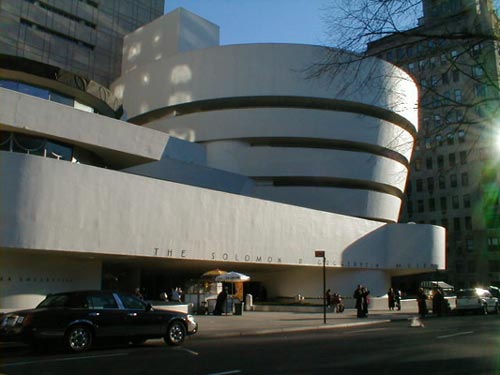
The end of World War II permitted a gradual return to prosperity across the globe, which in turn rapidly encouraged new buildings of economic health. Growing businesses required new offices and other facilities, as well as the expansion of programs in other institutions generated an extensive need for Interior Designers.
Design in this period possessed a norm of Modernism with a basis of International style. This made possible by the increasing amount of information through circulation of magazines and books—made easier by intercontinental air travel. Technical developments contributed as well to growth of this nature. Synthetic materials became readily available, such as plastics, as replacements for older, natural materials. Alongside scientific advancements, were commercial and residential improvements, such as the mechanical air conditioning system, inexpensive fluorescent lighting, and innovative textiles.
Aside from the growing population of the physical rewards of post war depression, the minds and talent of renowned names exercise design influence in
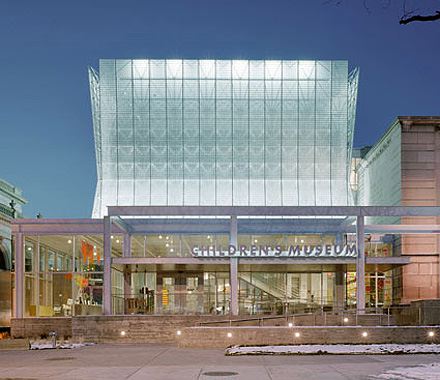 All of the people mentioned above as noted designers are well traveled and educated in design as well as had access to resources in order to work. “Architects have used a different set of values in deeming what a well-designed building should look like. Modern design seemed contemptuous of the local context, deliberately clashing with the surrounding built context instead of harmonizing with it. The result might look minimalist at times, but such designs require tremendous meditation on the part of the designer. Classicist design, because of its elaborate codification handed down from the ages, requires relatively little reflection. It is the meditative aspect of the profession that inspires the young to become architects, and serves as a major basis in judging excellent work.” Also is reference to
 professional versus traditional design (that exists in the over-populated, bad tast of the suburbs) which qualifies the work as ‘good’ or ‘bad’. So do you think, that in the Ascendency of Modernism, a time of excessive supply of economic funding, demand for design, unlimited access to information through magazines and books, and intercontinental air transport made it possible for an un-trained ‘commoner’ to self-educate themselves in the hopes of becoming an architect designer? Or do you agree with the blogger, that design is instinct to a person, and that no one without that accomodation can become a successful designer. In other words, is formal education a requirement during this time for a person to be ‘professional/good’ designer? How do you feel about formal education in the field now? Is it a neccessity in order to be a successful ‘professional’ designer, or could anyone acquire the skill? What do you believe, aside from formal training, that a person needs in order to be an architectural designer, and why?
by Jordan Powell
Sunday, April 1, 2007
The Ascendancy of Modernism

We are still paying for the design sins committed during the ‘ascendancy of modernism’.
Of course this is not to say that all of the design created after world war two was bad. In fact many groundbreaking designs were coming into fruition. Design in the, United States and Europe, was ‘happening’ in some ‘far out’ ways. Organic shapes became more popular, as did glassed wall skyscrapers. Outwardly society was futuristic and adventurous, but in reality society was a sham. Society began to flee the city causing what is known as ‘suburban sprawl’. Business still occurred in the city but after work each day the modernist posers would journey to their homeland, also known as, Suburbia. Suburbia was according to Pile a group tragically arranged settlements that were sad mock-ups of traditionalism. Contractors could easily develop suburban dwellings and make large profits.
Other sad events also occurred in the ascendancy period. Windows became obsolete. Florescent lighting and air conditioning took the place of nature. The home was becoming separated from its surroundings and thus the inhabitant from the world.
While there were some examples of creativity in domestic design (see Richard Neutra’s Kaufmann House) the majority of new home design was doubty and poorly executed. What does it say about us, as a civilization, when our public spaces define us as modernists but we live the lives of traditionalist? How is it possible that we could become so detached from who we claime to be and who we truly are? Surely this is pretence in design. It proves that we wanted to be modernists but couldn't bring ourselves to live the modernist lifestyle. If so then was modernism an unrealistic ideal?
Why does society feel so comfortable with a style based on poor interpretations of traditionalism? Perhaps it had something to do with economics and the expense of something unique. Still, are we contradicting ourselves in design even today? Suburbia has become the American dream. Nothing outrageous ever happens in suburbia (at least in our ideal Suburbia). Some suburban districts can even control what color you paint your house. While this may sound like some fascist rule it provides a great deal of comfort to suburban residents. People love suburbia because it’s predictable and safe. And who can blame them don’t we all want to live in somewhere safe?
If all this is true then will the principals of modernism ever prevail in everyday domestic design or are we stuck in suburbia? 

Modernism in America


