Monday, September 15, 2008

Victorian Era, A

As we previously learned, the Industrial Revolution was a time of exploration, discovery, new inventions, and new building materials. However, the Industrial Revolution also served as a starting block for the Victorian Style.

In the nineteenth century, the middle class was beginning to grow and gain power; the people learned how to turn the Industrial Revolution into a source of wealth (Pile). By 1851, goods that were once rare and only affordable to the wealthy upper class had become easy to make and were inexpensive. This made it easy for the middle class to decorate their homes with materials and accessories to show off their rank on the social ladder, much like the upper class had.

However, this need or demand for more goods did not come without a price. Factory and mill owners, like the middle class, began to gain more wealth and even more power. Explain the extent of the factory owner’s power. What are some pros and cons of the factory owners holding so much power? And how did their power influence the nineteenth century and the Victorian Style?

Sunday, September 14, 2008

Victorian Era, B.

The Victorian Era was directly impacted and influenced by the technological advancements being made. The style of this time period was a mere hodgepodge and mixture of previous styles. With this there was a certain freedom that some may argue has yet to be seen since. As the Industrial Revolution progressed, it became faster and cheaper to mass produce machine-made products that had been previously hand-crafted. The textiles were no longer designed by a craftsman, but were being created by factory workers with no artistic background. This process caused a decrease in quality, yet a more efficient cost effective way to produce goods. Ornamentation was often used to “conceal” imperfections in machine-made goods (Pile). Because of this convenience, ornamentation was used in excess and become the norm. With the growth of factories also came the growth of the middle class. The poor became wealthier, and with their new money, wanted to live the extravagant lifestyle. As they saw it, this meant acquiring large amounts of goods; the more the better.

The blend of styles, construction methods, and classes shaped the time period and style we know as the Victorian era. With technology advancing, it was an interesting time for experimentation with new methods, materials, and equipment. Specific examples of this technology is the power loom which efficiently produced textiles, and cast iron which was essential in mass producing “carved” ornamentation.
Although they brought efficiency, did these technological advancements have a negative or positive effect on the styles of the Victorian Era? What were some of the positive and negative stylistic qualities that came from this period?

Friday, September 5, 2008

Industrial Revolution, part II

Industrial Revolution, part II: Identity and comfort


The industrial revolution brought about many changes for human kind. These changes not only took the form of machines and architecture, but were also evidenced in society structure. Some historians have compared this transformation to the Neolithic revolution (Tate & Smith, 1986, pp. 221), when humans began practicing an agrarian society. The industrial revolution also transformed society in a way that allowed people to become individuals, prompting them to question authority and, for the first time, to question their fate. As more and more factories were added, more jobs and wealth was created; people saw this as an opportunity to “make” something of themselves and to “climb” the social ladder.


The ideas of “comfort” and “privacy” were still somewhat new to 19th century society yet architecture was beginning to take notice of these desires. In the early years of American history, most of the houses had been small and had few rooms however; most of the houses in the 19th century were separated into spaces that focused on the activity at hand (i.e. sleeping, eating, entertaining, cooking). This idea also translated into commercial spaces; hospitals, shopping centers, churches, and government buildings were all separated based on their unique operations. In addition, due to the efficiency of the machine, people were able to enjoy more relaxation, hobbies, and entertainment. Libraries, museums, and theatres were opened to accommodate leisure activities.


While much of the architecture (exterior and interior) during the Victorian period was comparatively similar from house to house, it was the interior décor that provided “identity” and “comfort” to the owner. The more décor, the higher the owner’s intelligence and social standing were gauged. How do you believe this relates to society today? How do you define comfort and identity? What examples can you cite? Be specific.

Industrial Revolution, part I

Industrial Revolution, part I: step forward or step in the wrong direction?

As we have discussed in class, historians relate the Industrial Revolution to that of the Neolithic Revolution, when humans became an agrarian community versus nomadic (Tate & Smith, 1986, p. 219). There is no doubt that because of the Industrial Revolution we have benefited from its many inventions, advancements and improvements. Without it, our lives as we know it would be non-existent. As a person that belongs to middle class society, I would not have had the opportunities which I enjoy today if it were not for mass production and technology. In addition, very few individuals would know and understand the same comfort and luxuries we expect today. Still, history shows that the ancient Romans (before the fall of Rome) were a very advanced society and had invented many processes and materials to make life easier and more secure. Unfortunately, these methods were lost or forgotten with the fall of the Roman Empire. It took many years before these techniques were revived and improved upon. However, these “improvements” employed different methods than what was originally utilized, and since 1850 we now have 35% more carbon dioxide in our atmosphere (CBS evening news, August 2007). Sooner or later our idea of “comfort” will have to become compromised in the interest of the world’s future. The effects of this change are sure to bring about a new revolution; one that is perhaps more healthy for our environment, but (as some feel) could be detrimental to our way of life.

Considering global warming, do you believe that the Industrial Revolution, specifically the discovery of coal and other fossil fuels, was a necessary step forward or a “misstep” in the advancement of modern man? Do you think we would have found the same quality of life if we had continued to develop the technology we were already using (such as wind and water mills)? Explain your answer.

Wednesday, August 27, 2008

A new beginning


Welcome back, gang! I look forward to our new semester together and look forward to discussing some exciting topics on Design Theory. I hope you will freely engage in some thought-provoking discussion and come back to use this as a tool in the future!

Tuesday, December 4, 2007

consumption

I thought this image would be a good example from our discussion about consumerism and our 'throwaway culture.' What design opportunities are presented by this giant pile of 'trash?'

and what ideas does this image bring up about design?

Monday, December 3, 2007

Context: The circumstances that form the setting for an event, statement, or idea, and in terms of which it can be fully understood and assessed.

In order to study a style or period of design, you must look at it in context. Design is constantly changing and reacting, constantly rebelling against the present style. There are always so many factors influencing design that it cannot be expected to stay the same for long. From production methods, to innovations in materials and processes, to social reforms and cultural influences, design is always fluctuating. We go from periods of intense ornamentation, like the Baroque, to theories of design that are the polar opposite, like Mies Van der Rohe's 'less is more.'

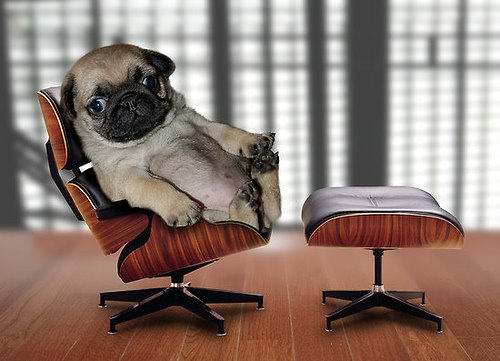
More recently, materials and production methods have had a significant impact on design. Because of new materials like plastics, rubberized foam, aluminum, and synthetic materials, designers have been able to experiment with forms and create things that are new and unprecedented. (Think of Gunnar Andersen’s rubberized foam chair for the Museum of Modern Art – page 320 in Raizman) or this one, which we all know:


This freedom of expression has not always been granted to designers. This is yet another context of design, the cultural influence of the time. Remember Hermann Muthesius, in Germany, who rebelled against Art Nouveau and felt that ‘individuality should be subservient to the creation of more practical, rational forms of furniture and fittings.’ (Raizman) If someone today tried to say, ‘Designers, abandon all individual expression, for there is one superior form that we must all strive to achieve,’ we would laugh at them! But during Muthesius’s time, that was exactly what was needed to help unify the country in the time leading up to World War I, lending to a strong sense of nationalism and a national identity that everyone could relate to.

For any given time period or style of design, you must consider all influences surrounding it and how they shaped that period or style. Of course, during the time that a new style is being developed and implemented, it is often unnamed and not necessarily considered a style until we can look back and examine it in context. So my question is, and you can all have fun with this, what would you call the ‘style’ that we are currently in? Consider contemporary designers and architects, (Frank Gehry, Michael Graves, Zaha Hadid, and other designer’s whose work we read about in Architectural Record or Digest) as well as the economic, political, cultural influences, and the influence that is starting to permeate the design community – the idea of ‘going green.’

Sunday, November 25, 2007


As we all know post modernism is design that rearticulates a distinct historical style. In Post Modernism classical forms are exaggerated or over simplified. Post modernism thrived during the 80's. Architects and designers like Graves and Venturi were (and still are) legendary for their perspectives. Still I wonder, what does it mean to be a post modernist? Does being a post modernist mean that you have honor for the past or that you laugh at the past? Look at Venture’s Chippendale chair. Is this reverence or is it mockery? And are the shadows of historical forms comforting when portrayed in this whimsical fashion or are they alarming?

Monday, November 19, 2007

Contemporary design & Mass Culture

Obsolescence remained a guiding principle in industrial design for the mass market, but during the 1960s many products abandoned flamboyance and playful novelty in favor of greater standardization and conformity. Products began to have less and less variety between them, but they came in different colors and available accessories offered the variety that the original product lacked. As a result, the industrial designer wasn’t much needed anymore in terms of styling and invention.
Technology was a big motivation behind many of the new products that were aimed at increasing and satisfying the wants and needs of the mainstream mass market. Formica was manufactured in an increasing number of colors and patterns suitable to every taste, including simulated natural and traditional materials.
The major influence at this time was the changing culture. For example, advertising for many products almost exclusively featured women either marveling over the products or playing hostess. What changed was the REJECTION of traditional role models in the 1960s, which lead to the women’s liberation movement. During the 1960s women debated and protested sexual discrimination and sought alterations to the gender stereotypes socialized through education and the media. But this wasn’t the only change in traditions going on. There was also an increasingly diversified youth culture was being joined by other secondary groups of the 1960s, such as “racial minorities, women and homosexuals,” each with a strong desire for recognition. Rebellions, strikes, and student protests during this time ranged from skirt-lengths and marijuana –use to abortion, the death penalty, and freedom of speech, racial discrimination, the voting age and the U.S. participation in the Vietnam War
With all of this change from old to new traditions happening and all the controversy arising, producers wanted to make sure they were appealing to a wide variety of the demographic, which at this time was a majority of youth. What do you think had the most impact on design during this period? Why? Why was it a big deal?

Sunday, November 11, 2007

Design and mass appeal/ new materials

After World War II the manufacturing industry started to explode due to the new forms of marketing and the public was tuning in and listening to what the companies had to offer. The working class was added to the target audience of the marketing strategies due to the increase in production in the manufactories the working class was earning higher wages. One of the new strategies to increase production after the Model T from Ford came out was the term obsolescence. To companies this meant they would offer options to the consumer instead of just one standard style and that there were always new editions coming out in the market constantly. This idea was endorsed also by the growing ads about “Keeping up with the Jones” and with the new development of new materials. These new materials included different types of plastics that enabled the companies to come out with different colors and textures as well as Formica, a vinyl-like flooring tile, as well as laminated plywood that was used on furniture as a surface covering. This lead to companies simply applying new finishes instead of creating or revising a product and market it as the new “must have” of the season. These manufactories were producing at such alarming rates one might wonder how they had the time to design these new products. This was seen more in the car industry as bands fought to be the first to produce a new design that the public would love. This “mass design” was a very risky business so many companies limited “the role of the design to superficial elements of product housing rather than integrating design with engineering, ergonomics, or other research-based considerations.” This was all due to the large scale of competition brought on by the increasing manufactories and trying to produce the latest and greatest. So due to this high competion do you think obsolescence hurt or helped good quality design as a whole?

This blog is intended for the interior design students in the college of design at the University of Kentucky. It was created with the intent to present students with information, providing them with a channel for contemplation and discussion.