Secession Design proved to be the most influential aspect of Art Nouveau. While florid curves of Belgian and French Art Nouveau came to be regarded as unconventional and willfully decorative, the more geometric forms of the Vienna work were more easily related to modernism. The movements of honesty through materials, and emphasis on puristic simplicity definitely carried into the modern world.
Two individuals were highly influential in the confining of the role of Art Nouveau in America. These two people were Sullivan and Tiffany. Neither were opposed to ornament as they both used much of it in their designs. Sullivan was known as the pioneer of modernism, and was the advocate of “form follows function”. (Pile, 295) Sullivan’s actual personal term of Art Nouveau was related to detail. Interiors and details continued to use nature based, florid ornament. He based his design around Curving art nouveau forms, which was later changed by one of his most significant students, Frank Lloyd Wright. Wright took his ideas and began to incorporate a more geometric design of his own. (Pile ,298) Tiffany used ornament through stained glass design. His designs were used in “residences, clubs, and similar locations his landscapes, floral, and semi abstract themes showed increasing similarity to French Nouveau work in glass.” (Pile, 296)
American Art Nouveau was looked at by many as a “style that failed”, or to dismissing it as “frivolous, tasteless, and even overly decorative.” (Pile, 299) But it wasn’t until World War II when the style was rediscovered and new studies brought it back into it’s rightful place. Do you think that Art Nouveau was a crucial step in the development of modernism and design today? Do you think that the ideas of these men of ornament and aesthetics are overshadowed by function in any cases today? How has recent interest in the Art Nouveau era established these designers as major figures in the movement?
Monday, September 29, 2008

Sunday, September 28, 2008
Art Nouveau & Vienna Secession B
The Industrial Revolution brought about many technological advancements that ultimately lead to the development of the skyscraper. The use of iron and later steel as well as the elevator were key factors. During the 1870's, skyscrapers were starting to be built in America; prior to that time, a six story structure was the limit (Morrison, 111). The skyscrapers of the late 19th century were seen as architectural challenges as their height and volume were considered artistic liabilities versus assets (Morrison, 113). Architects at this time, tried to diminish the height of the building and reduce the effect of volume. Louis Sullivan was a pioneer in modern American architecture who was willing to use ornamentation in his work. His architecture and interior design were reflective of the Art Nouveau movement that was popular from 1890 to 1905. Art Nouveau can be characterized by organic forms and curved design especially stylized floral and other plant inspired motifs (Wikipedia, 1). This movement was a rejection of the past and considered a bridge between historicism of Neoclassicism and Modernism (Wikipedia, 1). As Sullivan had a key interest in the "tall" building as a design problem, he devised a unique solution. His theory was to accept the practical conditions of the building, it's height and volume, and make beauty a part of the practicality (Morrison, 122). Sullivan gave visual unity to the skyscraper; he treated the building like a classic column articulating the base, shaft and capital (Morrison, 125). Sullivan's buildings "all have a simple vertical emphasis externally, rich but appropriate decorative detail, and public-space interiors filled with fine ornament" ( Pile, 298). His Wainwright building in St. Louis was thought to be the first successful solution to the skyscraper. The decorative details of predominantly organic shapes created a rich texture on a plane surface. This use of detail on the exterior of buildings to develop a unified as well as an aesthetically pleasing look exhibits creativity. Do you feel that the same can be said about modern, current day skyscrapers? Have the architectural details and interest of the late 19th century been lost to purely functional buildings? Was the invention of the skyscraper a positive force in the urban development of cities as well as the later development of commercial architecture?
Monday, September 22, 2008
Aesthetic Movement B
The idea of the Aesthetic Movement was to encourage people to turn away from machines and remember the days when the designer played every role in the design process. It is important to appreciate the work and effort put into a specific design. That value is lost when mass produced with machinery. Writers and designers of this time wanted the public to support the work of the artists opposed to the factories. Designers wrote books and published catalogues to simply inspire readers to use their imaginations and support hand craftsmanship. English writer and art critic, John Ruskin, heavily admired the crafts of the Middle Ages, and wanted to help bring that handiwork back through social change (Raizman 107). He encouraged designers to produce designs that reflected pride and craftsmanship (Raizman 108).
In this period in time, the public began to dislike the way their economy was running. Factories mass produced furniture in hopes to lower the cost so the middle class could afford to furnish their homes with the new fashion trends. “The development of the Modern movement can be seen as the battle for and against the machine (Tate 257).” Some people enjoyed the cost efficient pieces of furniture being mass produced because they were abundant. However, others believed machines took the designer out of the design process. The buyer may have to pay slightly more in cost, but they receive a high quality handcrafted product in return. Did the Aesthetic movement have an impact on design throughout history? These people rejected the thought of bettering our technology with machines because they thought it took away from the craftsmanship of the current designers. Do you think our advanced technology today sometimes takes away from the craftsmanship? The goal of this movement was to return value to the complex design process, and appreciate designers of the age. Do we sometimes take for granted the thought process and amount of effort it takes to design a single piece of furniture?
In this period in time, the public began to dislike the way their economy was running. Factories mass produced furniture in hopes to lower the cost so the middle class could afford to furnish their homes with the new fashion trends. “The development of the Modern movement can be seen as the battle for and against the machine (Tate 257).” Some people enjoyed the cost efficient pieces of furniture being mass produced because they were abundant. However, others believed machines took the designer out of the design process. The buyer may have to pay slightly more in cost, but they receive a high quality handcrafted product in return. Did the Aesthetic movement have an impact on design throughout history? These people rejected the thought of bettering our technology with machines because they thought it took away from the craftsmanship of the current designers. Do you think our advanced technology today sometimes takes away from the craftsmanship? The goal of this movement was to return value to the complex design process, and appreciate designers of the age. Do we sometimes take for granted the thought process and amount of effort it takes to design a single piece of furniture?
Sunday, September 21, 2008
Aesthetic Movement
While the creation of the machine and the fine tuning of the production line were considered by most a positive development during the Industrial Revolution, others saw this as a movement away from craftsmanship and personalization. After the rise of the Victorian Era in design, where individuals could go as far as to order a new home from a catalogue, intellectuals like John Ruskin wanted to return to simpler ways of creating great art and design. Ruskin was an English writer and art critic who held a high regard for the Middle Ages and the older Gothic style (Raizman, 107). He held to the theory that the boom of industrialization lead to a growth in materialism and eventually resulted in poverty, inequality, and misery. Ruskin believed that one should take extreme pride in their work and although it does take longer to finish, the work is more valuable because of the imperfections and the interaction with the human hand. He believed machine created objects were too uniform and drone-like, lacking in individuality. John Ruskin hated Paxton’s Crystal Palace because it embodied everything he disliked about the Industrial Revolution. Although he was a critic he had no specified style or set of rules for designers other than the work be a “unique creation reflecting the skill, pride, and effort of the craftsman” (Raizman, 108). We have discussed many times whether the Industrial Revolution had a harmful or helpful effect of the population. Now consider whether machines ruined the art itself. Do you think a move toward the old way of doing things and the appreciation of skill and workmanship of the craftsman was necessary after the standardization of design? After all, design follows a path of lows to highs. Do you think it was time to come back down to the roots of craftsmanship again?
Aesthetic Movement C
The Victorian era made way to mass production; to increase efficiency but leading to the decrease of true designs. Much of the designs love was lost in the level of skill and heart put into the making of each designs. Most of the furniture and work being created was hot off the industrial belt which wasn’t of the best quality. The expanding consumer oriented middle class was losing sight of the care put into the designs looking just to increase their status by accumulating as much “stuff” as possible like furniture dripping in detail and ornamentation. Although the factories made way for many job opportunities, and new way of supplying demand it led to some conflicting attitudes. John Ruskin placed his concerns in his writings and William Morris put his in activities like, the Pre-Raphaelite Brotherhood. The pair placed the issues of design and production within a new ethical framework based upon an almost religious attitude linking craft, art, and social reform. They criticized the dehumanizing aspects of mechanization and increasing division of labor in factories which were dedicated to the social benefits of handicraft (Raizman 66). Ruskin’s main emphasis was on the moral and spiritual benefits of craft rather than upon accommodating the technology of production of the contemplation of beauty. Morris started a firm which designed furniture and stained glass windows by Philip Webb and Dante Gabriel Rossetti and had an embroidery workshop run by his wife. Such furnishings established a link with craft traditions only minimally affected either by contemporary commercial considerations or by the use of machine tools and techniques (Raizman 109). This proved to be a successful means of production through affordable labor costs of production methods and vision for a society based upon meaningful satisfying work. Would you be a fan of Ruskin and Morris or would you push for the efforts that the Victorian Era created? The Victorian Era created a huge new class to gain importance but Ruskin and Morris soon learned that status came at a high cost in losing the connection between the designs and the designer. Would you put value in the work of the artist or in the status the piece of furniture gave to you? Would you settle for less (bad quality, one of thousand produced) because it was more (easier to obtain, gave you status because you could have lots “stuff” since it was affordable)?
Monday, September 15, 2008
Victorian Era, A
As we previously learned, the Industrial Revolution was a time of exploration, discovery, new inventions, and new building materials. However, the Industrial Revolution also served as a starting block for the Victorian Style.
In the nineteenth century, the middle class was beginning to grow and gain power; the people learned how to turn the Industrial Revolution into a source of wealth (Pile). By 1851, goods that were once rare and only affordable to the wealthy upper class had become easy to make and were inexpensive. This made it easy for the middle class to decorate their homes with materials and accessories to show off their rank on the social ladder, much like the upper class had.
 However, this need or demand for more goods did not come without a price. Factory and mill owners, like the middle class, began to gain more wealth and even more power. Explain the extent of the factory owner’s power. What are some pros and cons of the factory owners holding so much power? And how did their power influence the nineteenth century and the Victorian Style?
In the nineteenth century, the middle class was beginning to grow and gain power; the people learned how to turn the Industrial Revolution into a source of wealth (Pile). By 1851, goods that were once rare and only affordable to the wealthy upper class had become easy to make and were inexpensive. This made it easy for the middle class to decorate their homes with materials and accessories to show off their rank on the social ladder, much like the upper class had.
However, this need or demand for more goods did not come without a price. Factory and mill owners, like the middle class, began to gain more wealth and even more power. Explain the extent of the factory owner’s power. What are some pros and cons of the factory owners holding so much power? And how did their power influence the nineteenth century and the Victorian Style?
Sunday, September 14, 2008
Victorian Era, B.
The Victorian Era was directly impacted and influenced by the technological advancements being made. The style of this time period was a mere hodgepodge and mixture of previous styles. With this there was a certain freedom that some may argue has yet to be seen since. As the Industrial Revolution progressed, it became faster and cheaper to mass produce machine-made products that had been previously hand-crafted. The textiles were no longer designed by a craftsman, but were being created by factory workers with no artistic background. This process caused a decrease in quality, yet a more efficient cost effective way to produce goods. Ornamentation was often used to “conceal” imperfections in machine-made goods (Pile). Because of this convenience, ornamentation was used in excess and become the norm. With the growth of factories also came the growth of the middle class. The poor became wealthier, and with their new money, wanted to live the extravagant lifestyle. As they saw it, this meant acquiring large amounts of goods; the more the better.
The blend of styles, construction methods, and classes shaped the time period and style we know as the Victorian era. With technology advancing, it was an interesting time for experimentation with new methods, materials, and equipment. Specific examples of this technology is the power loom which efficiently produced textiles, and cast iron which was essential in mass producing “carved” ornamentation.
The blend of styles, construction methods, and classes shaped the time period and style we know as the Victorian era. With technology advancing, it was an interesting time for experimentation with new methods, materials, and equipment. Specific examples of this technology is the power loom which efficiently produced textiles, and cast iron which was essential in mass producing “carved” ornamentation.
Although they brought efficiency, did these technological advancements have a negative or positive effect on the styles of the Victorian Era? What were some of the positive and negative stylistic qualities that came from this period?
Friday, September 5, 2008
Industrial Revolution, part II
Industrial Revolution, part II: Identity and comfort
The industrial revolution brought about many changes for human kind. These changes not only took the form of machines and architecture, but were also evidenced in society structure. Some historians have compared this transformation to the Neolithic revolution (Tate & Smith, 1986, pp. 221), when humans began practicing an agrarian society. The industrial revolution also transformed society in a way that allowed people to become individuals, prompting them to question authority and, for the first time, to question their fate. As more and more factories were added, more jobs and wealth was created; people saw this as an opportunity to “make” something of themselves and to “climb” the social ladder.
The ideas of “comfort” and “privacy” were still somewhat new to 19th century society yet architecture was  beginning to take notice of these desires. In the early years of American history, most of the houses had been small and had few rooms however; most of the houses in the 19th century were separated into spaces that focused on the activity at hand (i.e. sleeping, eating, entertaining, cooking). This idea also translated into commercial spaces; hospitals, shopping centers, churches, and government buildings were all separated based on their unique operations. In addition, due to the efficiency of the machine, people were able to enjoy more relaxation, hobbies, and entertainment. Libraries, museums, and theatres were opened to accommodate leisure activities.
 While much of the architecture (exterior and interior) during the Victorian period was comparatively similar from house to house, it was the interior décor that provided “identity” and “comfort” to the owner. The more décor, the higher the owner’s intelligence and social standing were gauged. How do you believe this relates to society today? How do you define comfort and identity? What examples can you cite? Be specific.
Industrial Revolution, part I
Industrial Revolution, part I: step forward or step in the wrong direction?
As we have discussed in class, historians relate the Industrial Revolution to that of the Neolithic Revolution, when humans became an agrarian community versus nomadic (Tate & Smith, 1986, p. 219). There is no doubt that because of the Industrial Revolution we have benefited from its many inventions, advancements and improvements. Without it, our lives as we know it would be non-existent. A s a person that belongs to middle class society, I would not have had the opportunities which I enjoy today if it were not for mass production and technology. In addition, very few individuals would know and understand the same comfort and luxuries we expect today. Still, history shows that the ancient Romans (before the fall of Rome) were a very advanced society and had invented many processes and materials to make life easier and more s
 ecure. Unfortunately, these methods were lost or forgotten with the fall of the Roman Empire. It took many years before these techniques were revived and improved upon. However, these “improvements” employed different methods than what was originally utilized, and since 1850 we now have 35% more carbon dioxide in our atmosphere (CBS evening news, August 2007). Sooner or later our idea of “comfort” will have to become compromised in the interest of the world’s future. The effects of this change are sure to bring about a new revolution; one that is perhaps more healthy for our environment, but (as some feel) could be detrimental to our way of life.
Considering global warming, do you believe that the Industrial Revolution, specifically the discovery of coal and other fossil fuels, was a necessary step forward or a “misstep” in the advancement of modern man? Do you think we would have found the same quality of life if we had continued to develop the technology we were already using (such as wind and water mills)? Explain your answer.
As we have discussed in class, historians relate the Industrial Revolution to that of the Neolithic Revolution, when humans became an agrarian community versus nomadic (Tate & Smith, 1986, p. 219). There is no doubt that because of the Industrial Revolution we have benefited from its many inventions, advancements and improvements. Without it, our lives as we know it would be non-existent. A
s a person that belongs to middle class society, I would not have had the opportunities which I enjoy today if it were not for mass production and technology. In addition, very few individuals would know and understand the same comfort and luxuries we expect today. Still, history shows that the ancient Romans (before the fall of Rome) were a very advanced society and had invented many processes and materials to make life easier and more secure. Unfortunately, these methods were lost or forgotten with the fall of the Roman Empire. It took many years before these techniques were revived and improved upon. However, these “improvements” employed different methods than what was originally utilized, and since 1850 we now have 35% more carbon dioxide in our atmosphere (CBS evening news, August 2007). Sooner or later our idea of “comfort” will have to become compromised in the interest of the world’s future. The effects of this change are sure to bring about a new revolution; one that is perhaps more healthy for our environment, but (as some feel) could be detrimental to our way of life.Considering global warming, do you believe that the Industrial Revolution, specifically the discovery of coal and other fossil fuels, was a necessary step forward or a “misstep” in the advancement of modern man? Do you think we would have found the same quality of life if we had continued to develop the technology we were already using (such as wind and water mills)? Explain your answer.
Wednesday, August 27, 2008
A new beginning
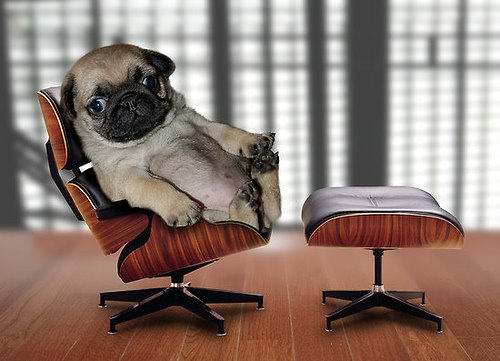
Welcome back, gang! I look forward to our new semester together and look forward to discussing some exciting topics on Design Theory. I hope you will freely engage in some thought-provoking discussion and come back to use this as a tool in the future!
Subscribe to:
Posts (Atom)
