Monday, December 1, 2008

Postmodernity, Late Modernism, A


Post-Modernity is a mixture of many styles, thoughts, and concepts a time during the late 70’s through the 90’s.  As Raizman summarized it, “The term postmodernism is also often found in conjunction with others such as post-industrialism and late capitalism, all referring to a culture in which consumption is the common subtext, emerging first in the early years of postwar affluence in the United States and spreading to Europe and other developed nations.” One might wonder where modernism ends and postmodernism begins.  Well, there is a fine line between the two and with the mixture of so many concepts during this time it makes it hard to pin point the start.  According to Raizman, one group during this time had been very influential. The Memphis group comprised of Italian designers and architects who created a series of highly influential products in the 1980's. They disagreed with the conformist approach at the time and challenged the idea that products had to follow conventional shapes, colors, textures and patterns. The Memphis group was founded in 1981. One of the leading members of this group was Ettore Sottsass, Jr.  His furniture designs are very significant during this time.  The Memphis group also worked with the Formica Corporation to design furniture with their new material called ColorCore.  Other designers during this time also experimented with new materials and shapes. Some of those designers are, Robert Venturi, Michael Graves, and Frank Gehry.   According to the Heilbrunn Timeline of Art History: From the late 1970s through the '80s, many architects and designers, reacting against the dictates of modernism, looked to neoclassical forms and materials for inspiration. Visual references derived from art and architecture superseded functionalism. Overt historical references and decoration transformed architecture, furniture, tabletop accessories, and jewelry into objects of fantasy. Well-known architects Robert Venturi, Michael Graves, and others accepted commissions to design products for such diverse international companies as Knoll, Alessi, and Formica. Over a period of more than five years, beginning in the late 1970s, Robert Venturi designed his first furniture line. Knoll International initially asked for three seating types, to which Venturi added six more chairs, three tables, and a sofa. The collection included a variety of major historical furniture styles—Chippendale, Queen Anne, Empire, Hepplewhite, Sheraton, Biedermeier, Gothic Revival, Art Nouveau, and Art Deco. Frank Gehry is also well known for his work in deconstructivism that is also a connected concept to postmodernism.  Sparke also defines postmodernism as, “that single vision of modernity had been replaced by a notion of ‘postmodernity’, which was multivalent and complex, in a state of continual flux, and represented by a diverse and pluralistic material culture." 

What are some other forms that you recognize around campus and the state that were designed during this style? Do you feel that we were ready for a new style even though modernism was still a strong style? What to you is the biggest difference between the modernism style and post-modernism?  Also, Do you feel that post-modernism was a step in the right direction? 

Thursday, November 27, 2008

Monday, November 24, 2008

Contemporary Design & Mass Culture, B

Ever since the war ended, different aspects of life, such as the economy, technology, as well as architecture and design had gone through numerous transformation. Shapes, forms, materials, color-palettes, ornamentation, and methods of construction of objects became simpler, more mass-produced, and highly advertised in order to accommodate the modern society who experienced the loss after the war and demanded a much more efficient lifestyle. In the 1960s, the division between "good design" and mass-production began to somewhat blurry as home furniture and accessories stores, such as Habitat marketed their goods on interior displays (Raizman, p. 318). In addition, synthetic plastic became the new and popular material for the production of furniture. For instance, British industrial designer, Robin Day designed the Polyprop Chair in 1963, from which the name of the seating corresponded to polypropylene, a synthetic plastic used as the main material (Raizman, p. 317). Since people were looking for more ease and efficiency in furniture, these chairs were designed to be stackable; hence, they became easy to store, and people were able to save some space in their homes. Although there was a connection between home furnishing and fine arts, these mass-produced goods were more sleek and simplified in general as designers and the overall society opted for standardization because of its easy assembly and lower production cost. Furniture, kitchen appliances, home accessories, and even automobile were more streamlined and rectilinear in form and subdued in color.

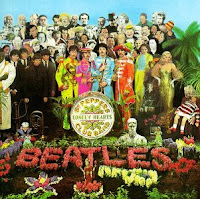
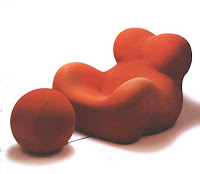
Later, the demand of mass-production had apparently influenced the development of mass culture and mass design. Formica, the new plastic material was introduced in 1964 at the New York World's Fair (Raizman, p. 338). This plastic material was usually attached to plywood and used on kitchen furniture. As Formica became more widely advertised, people were able to use the material as prefabricated goods and adjust the design according to individual's personal taste. Later, this influenced the modern society, especially the younger generation to express their individuality and freedom in every aspect of life, such as fashion, arts, design, music, and so on. Fringes or sub-cultures were also created as diversity among groups, such as women, homosexuals, and racial minorities became more visible. These groups were determined to make a statement and get their voices recognized, which was identified by their choices in bold clothing and rock 'n roll music. The emergence of the Beatles was one of the highlights of this new philosophy (Raizman, p. 341). In addition, the search for self-expression led to a number of protests and the emergence of rebellions. The Pop Art style, led by Andy Warhol, was also the product of this new movement (Raizman, p. 342). From the use of mass media, the rebels expressed their protests against discrimination and conformity through graphic design. Posters and album covers were artistically designed as tools for speaking on behalf of freedom. Wall graffiti was also popular among the youth groups as a way of getting their political and social opinion across. This had affected interior design to move towards a more free and contemporary approach. Influenced by the Pop Art movement, design became more abstract, whimsical, and somewhat experimental, which reflected the identity of the young and more liberal minds. The Donna chair, designed by Gaetano Pesce was one of the examples from the Pop Art movement that represented the freedom of women. The curvilinear form and feminine features suggested women figures, whereas the attached, sphere ottoman reflected how women became prisoners in their own society (Raizman, p.348). 
 

In conclusion, the 1960s was the era of experimentation as people began to search for their identity, develop new attitude, and use design to communicate their minds and ideas in order to be accepted in the society. How do you think Pop Art has affected design today? Was the movement crucial in the development of contemporary design or do you think the whole idea of speaking against conformity was a mess and unorganized? Explain. How was the new materials, such as plastic and Formica, been applied today in design? Give examples.

This blog is intended for the interior design students in the college of design at the University of Kentucky. It was created with the intent to present students with information, providing them with a channel for contemplation and discussion.