Tuesday, September 29, 2009

Arts and Crafts Movement: Britain

Towards the end of the nineteenth century many outspoken and influential writers, artists, and reformists began to rebel against the overly ornate, machine-made, Victorian style and strive for more simplistic, man-made pieces. This brought about the Arts and Crafts movement. 


One of the pioneers of the Arts and Crafts movements was John Ruskin, an art critic, writer, and social reformer who believed that the beauty of an objects was found in its construction. The method, the materials, and the struggle of the artist were to him just as important as the finished object. He disliked the “perfection” of the objects made by machines because he thought that it was not personal and the workers creating them lacked joy and pride in their work (Raizman 107). Ruskin concentrated more on the spiritual benefits of design than the technology, production, or beauty of the products. 


A contemporary of Ruskin’s, William Morris, was also a big contributer to the Arts and Crafts movement. Morris was not only a designer, artist, and craftsman: he was also a poet, novelist, publisher, socialist, translator, and public speaker. He too disapproved of the emphasis placed on money, material goods and the over- indulgence of the Victorian Era. He began his interest with design through the interiors of his own house (Red House, designed by Philip Webb). Rather than buying the furniture for his house in shops, William Morris and his friends decided to create the pieces for his home which later lead to the firm Morris, Marshall, and Faulkner (109). The firm moved away from the creation of furniture and toward the design of patterns for ceramic tile, embroidery, wallpaper, carpets, and printed fabrics (111). He refused to use machines to creates his patterns which were focused on nature and were two-dimensional. Despite his best efforts to “overthrow” the use of the machine, his hand-made design were more expensive and took more time to create. He realized that man would have to learn to work along with the machine to be successful. 


Do you think that even because they realized that they could not completely do without the machine, the Arts and Crafts Movement was still successful? 


Do you believe that as a society we have once again turned our backs on hand-made goods and opted for more cheaply made machine products? (EX: buying products from IKEA instead of from local craftsman)

Sunday, September 27, 2009

The Craftsman Movement & Frank Lloyd Wright

In rebuttle to the ostentacious Victorian style, the Craftsman movement emerged in Amercia, practically making a 180 degree turn from the gaudy heaviness of the Victorian era. Several individuals contributed to the development and spread of this style but Gustav Stickley is often recognized as the leader (Pile 275), and Frank Lloyd Wright is remembered for his work developed in his style.

Stickley made huge strides in the popularity department of the movement by starting a magazine called “The Craftsman,” featuring current Craftsman homes and furniture (Pile 276). Stickley’s own personal furniture style included very simple design; natural materials like wood and leather, hand crafted joinery, and very little if any ornamentation (Pile 276).

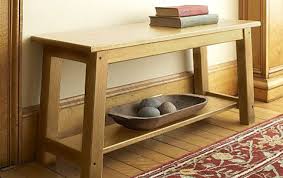
Stylistically the Craftsman movement was the stripping away of everything Victorian. Where before there had been rich embellishment and deep carvings, now there were smooth surfaces, clean geometric lines, more natural materials, and detail only from the constructed form. It came to sometimes be called Mission because of its close resemblance to furniture made previously for the California missions (Pile 276). Stemming off of Stickley’s work, Elbert Hubbard established Roycroft, producing mission furniture and posing a direct competitive threat to Stickley’s sales.

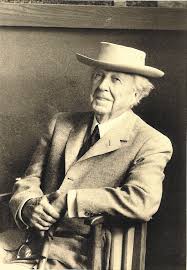
Frank Lloyd Wright, though pursuing a continuation of the Craftsman style, had a more narrowed approach. He strongly considered the relationship between the plan of the home and what was seen throughout or experienced within its walls (Mallgrave 135). He strove for an organic quality to the house, all of its elements naturally coming together to form a unified whole, considering the aesthetic to be an expression of the structure as a solution to a problem, rethinking the concept of style (135). To him, the final product should be an expression too, of the process employed to construct it, and not a cover up act. It should be one in unison with its environment, and not devoid of context (135).

In analyzing the Craftsman movement, do you think this trend could be one that might catch on again today or have we leaned too much toward the Industrial Revolution’s steel skyscrapers, prefabrication, and machine-based construction to come back around?

Relating back to some of the questions discussed during the sections on the Industrial Revolution and the development of fossil fuels, what effect do you think a continuation of the Craftsman’s push toward natural materials like wood, and hand- rather than machine-crafted elements, would have done for our current situations (such as pollution, dwindling amounts of natural resources and our undeniable dependence on them, global warming, etc.)?

Monday, September 21, 2009

Design Reform and the Aesthetic Movement

With the Industrial Revolution in full swing, both socio-political and design concerns were surfacing in the early part of the nineteenth century. While the increase in manufacturing productivity had created a new middle class with the economic power to purchase the abundance of products being produced, it had also created an urban laboring class. Laborers suffered from long work days, low wages, and perilous working conditions. Cities became overcrowded, unsanitary and disease-ridden. Working class discontent and labor uprisings pointed to the need for reform.

The glut of manufactured goods created concerns over declining production quality. Beginning in the 1830s, the British government was actively steps toward design reform. The Select Committee on Arts and Manufactures, which was under the Board of Trade, sought to increase manufacturing exports by taking steps to improve manufacturing. During this period schools of design were established. The Select Committee advocated for a "balance between beauty and utility and the use of decoration derived from the study of botanical forms" (Raizman 50). The goal was to apply a common standard of taste.

The Great Exhibition of 1851 in London was much criticised by advocates for design reform, including Owen Jones, designer and an exhibition organizer, who said that many products showed "novelty without beauty, beauty without intelligence, and all work without faith" (Raizman 55). Other advocates of reform of this time period were A.W.N. Pugin who advocated for Gothic Revival and Charles Eastlake who published Hints on Household Taste in Furniture, Upholstery, and Other Details (1868).

Design Reform was an effort to apply a level of order and taste to the overwrought eclecticism and excessive ornamentation of the Victorian Era. In the second half of the nineteenth century these sentiments had gained momentum began to give way to a new approach to design. This age of reform is characterized by streamlining, simplification and lightening of the heavy Victorian style. Elsie de Wolfe, the first woman professional decorator, was an innovator in this way. She "stripped away the many overlays of things that the Industrial Revolution had made possible by 1851" (Tate & Smith 240). A visitor said of her dining room, that it was "a model of simplicity... gold and white" (238). This overriding focus on beauty, unity, and cohesiveness of design became known as the Aesthetic Movement. "Sources of inspiration, materials, processes, and subjective meaning" were critically important in this movement (Raizman 69).

The wealthy began employing design firms to handle the outfitting of their homes. One such firm was that of Tiffany & Wheeler, Louis Comfort Tiffany who would go on to found the famous lamp company and Candace Wheeler who was known for developing a process for simulating embroidery on fabrics. They worked for such prestigious clients as President Arthur and Mark Twain. Tiffany and Wheeler's design for the Veterans' Room and Library at the Seventh Regiment National Guard Armory, New York, was an intricately patterned and textured space typical of the Aesthetic Movement. Every surface was transformed by some detailing (Meikle 71-73).

The call for reform would continue to evolve. William Morris and John Ruskin view of design reform would advocate for a new ethical framework linking craftsmanship, artisanship, and social reform. Their philosophies would give rise to the Arts and Crafts Movement.

Questions: Design is cyclical. The Victorian Era has been called Rococo Revival. The revolt against its excesses resulted in the Neoclassical Style. The revolt against Victorian Style culminated in Modernism. Where on the continuum of minimalist to eclectic do you think we are currently? Where do you think design is headed?

Monday, September 14, 2009


The Victorian era was the blast into skyscrapers. The demand for skyscrapers was a process. As business’s developed and grew their demand for communication also grew. Because the telephone had not been invented yet, it was highly important for the business activities are in close proximity to each other. The results were overcrowding in offices and the “business district”. This also led to costly land prices and high rents. Because the cities were limited in growing space there was only one solution: to build up. Masonry and columns had prevented this upward growth until now with the introduction of cast iron. Cast iron was an extraordinary material. Its main advantage was that it could be prefabricated. This prefabrication was also used with glass to fill the exterior of these new skyscrapers. Wooden floors came next and were extremely dangerous because they were very flammable. Because of this fire hazard architects preferred to use masonry on the outer walls to create a fire barrier. The next improvement in skyscrapers was the wooden floors. They were replaced with “systems using arches of brick or terracotta tile supported on iron beams and columns wrapped with heat insulation” (258).

These early skyscrapers do not resemble the skyscrapers of today at all. Today the norm is about 20 to 40 floors but these first ones were souring with only 8 to 12 stories. It was very hard for architects to create these skyscrapers because there was no previous history about them. The most precedent use for skyscrapers was for offices. “The typical office building had rows of small offices arranged along corridors so that every office could be close to windows for light and ventilation” (259). The commonplace workspaces were open and were used for the busy workers. All the normal business equipment came into view during the late Victorian Era. Some other key inventions were gaslight, which was followed by electricity, and the telegraph followed by the telephone. Meeting rooms and business executive’s offices only differed a little by adding a rug and pictures. Skyscrapers were also used for apartments, retail stores, swear shops, factories, and hotels.

So after reading and understanding the importances of skyscrapers think about these questions:

In your opinion was the development of skyscrapers a good move? Meaning did they improve the way of living or did they somehow hurt it?

VICTORIAN ERA: Impressions and Privacy


During the Victorian Era many new technologies and methods were developing allowing for more people to have access to fine furnishings. With several specializations developing in furniture design house plans changed to allow for more rooms, because people could now afford to fill them. Like “Ames” said, much of the design of the front of the house was based on first impressions. Houses developed to allow the host family to keep their guests in the front entertaining rooms and have their private living quarters hidden from view upstairs.

jo0101.jpg

Many houses had what was called a front hall where guest were first received, here much consideration was given to the furnishings. The larger and more expensive your hallstand and other furnishings, the higher your social standing would seem to the guest who enter your house. The Victorians perfected the concept of controlling the first impression.


What guests had access to was changing, the family now had some control over what other people thought when they came to visit. These new ideas on the importance of first impressions allowed for the development in the concept of privacy. Rooms could now be entered independently, you no longer had to travel through one room to the next, invading the privacy of the occupants along the way. Families could now afford for everyone to have their own bedrooms were they could go to escape in quite. They were no longer forced to all sleep in the same room.


Having visitors became a more common occurrence. As privacy became more of a need then a luxury, designers started to incorporate it into their programming. Dumbwaiters were developed so waiters wouldn’t interrupt a private conversation, back staircases were added so the servants could move around undetected to perform their duties. Victorians at the time were very concerned with what others thought of them and didn’t want to be seem as poor or unable to afford the luxuries. People would sometimes splurge to decorate their front halls and parlors more elaborately then the rest of their houses. You might even say some people still do this today when they buy a fancy sports car they only use for work, or buy designer clothing with large obvious labels to show others what they can afford.


Was the development of privacy a much needed development or was it one of the main contribution factors to the deterioration of family structure? And did this obsession with first impressions stimulate consumerism or was it the other way around, and how can these values be seen in todays culture?

Thursday, September 3, 2009

Industrial Revolution, Part I

Industrial Revolution, part I: step forward or step in the wrong direction?

As we have discussed in class, historians relate the Industrial Revolution to that of the Neolithic Revolution, when humans became an agrarian community versus nomadic (Tate & Smith, 1986, p. 219). There is no doubt that because of the Industrial Revolution we have benefited from its many inventions, advancements and improvements. Without it, our lives as we know it would be non-existent. As a person that belongs to middle class society, I would not have had the opportunities which I enjoy today if it were not for mass production and technology. In addition, very few individuals would know and understand the same comfort and luxuries we expect today. Still, history shows that the ancient Romans (before the fall of Rome) were a very advanced society and had invented many processes and materials to make life easier and more secure. Unfortunately, these methods were lost or forgotten with the fall of the Roman Empire. It took many years before these techniques were revived and improved upon. However, these “improvements” employed different methods than what was originally utilized, and since 1850 we now have 35% more carbon dioxide in our atmosphere (CBS evening news, August 2007). Sooner or later our idea of “comfort” will have to become compromised in the interest of the world’s future. The effects of this change are sure to bring about a new revolution; one that is perhaps more healthy for our environment, but (as some feel) could be detrimental to our way of life.

Considering global warming, do you believe that the Industrial Revolution, specifically the discovery of coal and other fossil fuels, was a necessary step forward or a “misstep” in the advancement of modern man? Do you think we would have found the same quality of life if we had continued to develop the technology we were already using (such as wind and water mills)? Explain your answer.

Industrial Revolution, part II


Industrial Revolution, part II: Identity and comfort


The industrial revolution brought about many changes for human kind. These changes not only took the form of machines and architecture, but were also evidenced in society structure. Some historians have compared this transformation to the Neolithic revolution (Tate & Smith, 1986, pp. 221), when humans began practicing an agrarian society. The industrial revolution also transformed society in a way that allowed people to become individuals, prompting them to question authority and, for the first time, to question their fate. As more and more factories were added, more jobs and wealth was created; people saw this as an opportunity to “make” something of themselves and to “climb” the social ladder.


The ideas of “comfort” and “privacy” were still somewhat new to 19th century society yet architecture was beginning to take notice of these desires. In the early years of American history, most of the houses had been small and had few rooms however; most of the houses in the 19th century were separated into spaces that focused on the activity at hand (i.e. sleeping, eating, entertaining, cooking). This idea also translated into commercial spaces; hospitals, shopping centers, churches, and government buildings were all separated based on their unique operations. In addition, due to the efficiency of the machine, people were able to enjoy more relaxation, hobbies, and entertainment. Libraries, museums, and theaters were opened to accommodate leisure activities.


While much of the architecture (exterior and interior) during the Victorian period was comparatively similar from house to house, it was the interior décor that provided “identity” and “comfort” to the owner. The more décor, the higher the owner’s intelligence and social standing were gauged. How do you believe this relates to society today? How do you define comfort and identity? What examples can you cite? Be specific.
Industrial Revolution, part II: Identity and comfort


The industrial revolution brought about many changes for human kind. These changes not only took the form of machines and architecture, but were also evidenced in society structure. Some historians have compared this transformation to the Neolithic revolution (Tate & Smith, 1986, pp. 221), when humans began practicing an agrarian society. The industrial revolution also transformed society in a way that allowed people to become individuals, prompting them to question authority and, for the first time, to question their fate. As more and more factories were added, more jobs and wealth was created; people saw this as an opportunity to “make” something of themselves and to “climb” the social ladder.


The ideas of “comfort” and “privacy” were still somewhat new to 19th century society yet architecture was beginning to take notice of these desires. In the early years of American history, most of the houses had been small and had few rooms however; most of the houses in the 19th century were separated into spaces that focused on the activity at hand (i.e. sleeping, eating, entertaining, cooking). This idea also translated into commercial spaces; hospitals, shopping centers, churches, and government buildings were all separated based on their unique operations. In addition, due to the efficiency of the machine, people were able to enjoy more relaxation, hobbies, and entertainment. Libraries, museums, and theaters were opened to accommodate leisure activities.


While much of the architecture (exterior and interior) during the Victorian period was comparatively similar from house to house, it was the interior décor that provided “identity” and “comfort” to the owner. The more décor, the higher the owner’s intelligence and social standing were gauged. How do you believe this relates to society today? How do you define comfort and identity? What examples can you cite? Be specific.

Tuesday, December 16, 2008

Lake Shore Drive Apartments

Sorry for the confusion guys. Here's my slide show. Hopefully it'll work this time.

Monday, December 8, 2008

Design in Context, Part A


Design in a way is an act of balance. Designers have to maintain a “balance between the permanent and the ephemeral, between nature and the consumer dominated culture” that we live in today(Raizman 363). This whole seesaw of balance believe it or not relies on us as designers to keep in check. One major thing that is throwing it off kilter is the over consumption of our society.
Our society has thrived on consumption throughout the past fifty years. We are a use and throw away society. It is mainly seen and studied in environmental awareness and the heath food industry. This is even seen through furniture sales. IKEA for example has had huge international success with its modern furniture designs. With consumption comes obsolescence, and with obsolescence also comes consumerism. In fact, “obsolescence remains the cornerstone of consumer-led design, involving the stimulation of desire through novelty on one hand and the effective management of production costs on the other”(Raizman 366).
Another driving force behind modern design is the means of miniaturizing technology. This is seen in all sorts of ways like cell phones and laptops. This can be a challenging aspect of design because so many constraints are placed on the designer which leads to a certain amount of conformity when it comes to miniaturization in electronic products(Raizman 372). In addition to this, graphic design has a huge impact on the modern designs of today. The fact that designs can be “soft” or easily changed in a digital format really makes it easy for designs to change with little effort. Finally some other influences are materials technology and craft.
If universal design is defined as “the design of products and environments to be usable by all people, to the greatest extent possible…”(Raizman 371) do you think that we are achieving this in our society as a whole? Also do you feel that this new technical society is straying too far away from the previous handmade society we used to live in? And what in your own life do you think as the largest effect on modern design today?

This blog is intended for the interior design students in the college of design at the University of Kentucky. It was created with the intent to present students with information, providing them with a channel for contemplation and discussion.