Sunday, November 1, 2009

Art, Design and Industry (Art Deco): The beginning

The beginning of the Art Deco period was motivated by the admiration for the beauty of new geometric forms and technology possibilities. technology was beginning to accelerate to great extents in which large quantities could be produced in less time. The pace in which goods were produced stimulated the quality of life for the wealthy and the middle class because they could afford these new luxuries. Because of the boost in technology and new advancements, this period is also known as the "machine age."
The Metropolitan Museum of Art in New York, was significant because it stimulated public interest in newer designs by the artwork that was displayed. Museums promoted modern styles emphasizing the integration of art into the lives of the middle class and for the ability of the decorative arts to raise the level of public tastes (Raizman, 206). Vogue and Vanity Fair were popular magazines that used illustrations to cultivate the image of modern life associated with fashion, sport, travel, etc. This method is still very successful today. Geometric shapes were very popular such like the designs of Raymond Hood and Ruth Reeves. These designs were very similar to Frank L. Wrights horizontal and geometric features in his architecture. Hood created furniture and interiors that emphasizes industrial materials and angular geometric decoration (Raizman, 208). Reeves's "electric design" uses zigzag overlapping shapes to convey the speed and man-made power of electric energy (Raizman, 208). Another very geometric design was the Skyscraper bookcase designed by Paul Frankl. We fimiliar with Skyscraper as being a tall building but it can also be used to refer to furniture of the Art Deco era, it has a strong sense of verticality with rectangular shelving sections.
Like most design periods, interiors during the 20th century were based off of past centuries. The wealthy homes inhabited large, heavy brick or stone with comfortable frame houses while the interiors echoed ideas from the Aesthetic Movement with wide rooms, soft hangings and old mahogany (Meikle, 89). Most families of good wealth had a bungalow and living areas were scattered with decorative flower motifs and elaborate designs on fabric resembling the Victorian era (Meikle, 89). The poor lived in rickety little houses with old pieces of furniture, solid heavy quilts and very few furniture if any (Meikle, 89). Luckily, the machine age required art to be simplified so that people from any class could enjoy the products and it would be cheap enough for the most people to afford it.
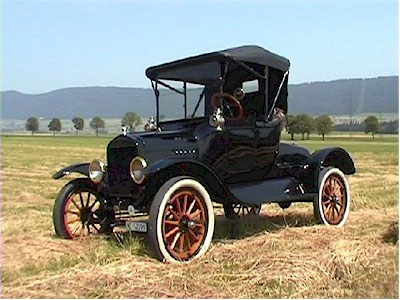
Henry Ford is an important figure in this period who is widely known for his productions of the automobile, specifically the Mobile T which is a type of car he invented. The automobile transformed the way people live, work, and how to identify themselves whether they have a car because they need it or to show off their economical status.

What are museums used for today? Do you think an art museum today still stimulates new ideas and designs for the future? Money is always a huge influence on where you live and what items you can afford to have, how does money affect us today and influence the way we live? does everyone have equal opportunities to own goods or do you think there is a large gap between wealthy and poor?

Art Deco & Industrial Design: The Industrial Designer

The profession known as industrial design emerged during the Great Depression of the 1930s (Meikle p.105). Many of the early industrial designers started out in the advertising business and dealt a lot with stage and set designs for theaters. An industrial designer is neither just an artist, nor simply an engineer, nor a market researcher but rather a combination of all three (Sparke p. 94). What did these industrial designers do? As Fortune magazine of 1934 explained: “Now it was the turn of the washing machines, furnaces, switchboards, and locomotives. Who was to design them?” (Spark p. 96) And the answer to that question is the industrial designer. The industrial designer was now in charge of coming up with all different kinds of machines for the new modern era. The problem with this was that the designers struggled to find a machine aesthetic both intellectually defensible and commercially viable (Meikle p. 113). They wanted to create a style that was an honest expression of the technology of this new modern life. The style they developed was called streamlining. Streamlining was based on the new science of aerodynamics and borrowed from the emerging technology of aviation where it was both functional and organic (Meikle p. 113). Streamlining allowed a vehicle to travel much faster by eliminating the wind resistance.

Some of the industrial designers that were very prominent at the time were Walter Dorwin Teague, Norman Bel Geddes, Raymond Loewy, Henry Dreyfuss and Henry Ford. Henry Ford is one of the first industrial designers. The automobile was the most significant technology of the 20th century, transforming the way almost all people lived, worked, and identified themselves (Meikle p. 102). Henry Ford’s mass production using the assembly line helped the automobile become so popular. The Model T transformed popular fantasy into universal reality (Meikle p. 102). By 1928, there were more than 20 million automobiles registered, one for every six people (Meikle p. 102). This changed the world forever. Another industrial designer was Walter Dorwin Teague first worked as an advertising agent before he designed industrial products. Many of his designs were informed by a desire for simplicity and unity as well as a belief in the ability to design to improve the quality of life by promoting an awareness of taste and discrimination (Raizman p. 215). One of Teague’s most well known developments are the redesigning of several cameras for Kodak. Norman Bel Geddes was very influential with the streamlining of the automobile. He came up with several prototypes for a streamlined automobile but unfortunately they were never put into production. He did however serve as a consultant to the Chrysler Corporation for the 1934 Airflow, which adapted a more unified approach to the construction of the grill, hood, and windshield (Raizman p. 216). The Airflow contributed to a streamlining fad among the public and convinced GM and Ford to use it throughout their automotive lines (Meikle p. 118). Streamlining also started having an impact on the railroads, such as with the Zephyr. Raymond Loewry first worked in illustration, window dressing, and advertising before he founded his own industrial design firm in 1929 (Gorman p. 155). His office designed trains, Greyhound buses, Coke bottles, International Harvestor farm machines, the Skylab, and many other products for the world’s largest companies over the next 50 years (Gorman p. 155). His desire was to naturally give the pubic the most advanced product that research can develop and technology to produce (Gorman p. 155). He also served as the in-house “art director” for Westinghouse radio cabinets from 1929 to 1931 before becoming an independent consultant and designing car bodies for Hupmobile (Meikle p. 109-110). One of his major contributions was the Coldspot refrigerator. Lowery emphasized its verticality by using long, slender hinges and running three parallel ribs up the middle from bottom to top (Meikle p. 110). Another industrial designer of the time was Henry Dreyfuss. Dreyfuss started out as a set designer working with Geddes. Sears, Roebuck hired Dreyfuss to design a washing machine with the supplier’s engineers (Meikle p. 109). His washing machine was named Toperator and showed a careful blend of functional and psychological considerations. Dreyfuss was very concerned with the functional fit of a product to the person using it. All of these industrial designers became public heroes, filling the pages of popular magazines, which even described what they even had for breakfast (Sparke p. 98). They soon became symbols of the modern age, pointing to the future at a time when economic situation was less than optimistic (Sparke p. 98).

Without the invention of industrial designers where do you think we would be today? Who would have made those products that the industrial designers made? How large of an impact do you think industrial designers has had on the world today?

Monday, October 26, 2009

Technology and Modernism: DE Stijl, Constructivism

De Stijl

De Stijl means the style for Dutch and also, the name of a journal that was published by Dutch painter, designer, writer, and Theo van Doesburg in Holland.

During the World War I, Netherland was remained natural, so Dutch artists were not able to leave the country thus the art was separated from the world.

Dutch designers used Frank Lloyd Wright's design, that was flat roof and overhanging eaves, in their own architecture. Also, they extend the principle in many different parts such as painting, sculpture, typography, furniture, interior ensembles, and architecture.

For Van Doesburg, interior space and architecture were considered as a sort of walk-in painting. Mondrian had similar ideas but more emphasis on harmony and balance. He used asymmetrical formal balance by using only straight horizontal and vertical lines and rectangular forms. He introduced the new conception of art as Neoplasticism or the “New Plastic” which means the general principle of plastic equivalency. In 1920, Mondrian and Van Doesburg designed a new cover for De Stijl. This new cover was provided Neoplastic idea. Mondrian also believed that art and life should be together that means art should not be separated from living.file:///Users/eunyoungan/Desktop/images.jpeg

Especially, for Van Doesburg, color was important. He used color for better understanding abstract arts of work. In his work, the color helps to reinforced integration, unity and balance. Van Doesburg designed the patterns for colored brick tiles in a Duch building and window composed of colored squares for another building.

Probably, Schröder House in Utrecht is the best known architecture for De Stijl project. This house has been built completely according to De Stijl principle. Especially, in the interior space, this building was created a “living” of work of non-objective art.file:///Users/eunyoungan/Desktop/180px-RietveldSchroederhuis.jpg

Constructivism

Constructivism was created in Russia around 1925. It started for Soviet Workers Club. The artist and designer Alexander Rodchenko (1891-1956) designed the reading room and furniture. This Soviet furniture was built in a workshop setting rather than commercially manufactured. These forms were standardized and used for collective values for the Communist society.

Kasimir Malevich (1878-1935) is the most representative artist for abstract non-object style of art. He used the term Suprematism and noted the similarity between the geometric rectangular form and the form of modern technology. Malevich helped the Suprematist through the school (UNOVIS). This school was not only recognition of the non-objective art but also, purpose of propaganda.file:///Users/eunyoungan/Desktop/images-1.jpeg

El Lissitsky (1890-1941) worked with Malevich at UNOVIS, he used the abstract art as a means to a political end. In 1922 El Lissitsky published as international journal of the new art “ object”. This journal had articles and photographs about fine art, decorative art, and industrial products.

Rodchenko was one of the artists who directly addressed collecitve social needs through his work. His works were shown through the organization INKHUK(The Institude of Artistic Culture). The concept of the “artist-constructor” was applied to his design. During the early 1920s, there was a change. The young Constructivists had turned to realism. The Constructivists hope that further developed the contribution of the “artists-constructor” in Russia. RodchenKo’s posters were very influenced in that period.

What do you think about the De stijl and Constructivism? These two movements were related and very influenced to the society. Do you think arts should be affect to the society, or not? What do you think the beauty from the abstract of object like De stijl principles?


Sunday, October 25, 2009

Technology and Modernism: Bauhaus


The Nineteenth-Century was a whirlwind era of advancement in technology and the development of industrial design. A demand for individuals who could combine artistic with technological skills (Sparke, 158) arose when British manufacturers desired “appropriately trained” workers. The idea of the craftsman and the artist as separate individuals was not part of the forward thinking concept of modernism. The solution to this issue was conceived in the form of the Staatliche Bauhaus, a new educational program that attempted to establish a relation between the emerging modernism of the fine arts and a broad range of design and craft fields (Pile, 320).


German architect and designer, Walter Gropius, headed the Bauhaus in Weimar, Germany, which began with the combining of the Academy of Fine Art and the School of Applied Arts. Staff members of the Bauhaus included some of the most influential expressionist painters of the time – Lional Feininger, Wassily Kandinsky, Paul Klee, and Oscar Schlemmer – who, although sometimes collaborated teachings, specialized in specific areas of study.


The institution’s guild-inspired system allowed for exploration of art and design, but also called for some concentrated learning as well. The Bauhaus’ goal was to bring together all creative effort into one whole, to reunify all the disciplines of practical art – sculpture, painting, handicrafts, and the crafts – as inseparable components of a new architecture (Gorman, 98). This new architecture was idealized in the design and construction of the Bauhaus’ second location in the city of Dessau (the Bauhaus was forced to move in 1925 due to economic and political problems). With Gropius designing the new buildings himself, he developed what was then classified as the ‘International Style’. The term reflects the fact that modernism was not marked by the strong national differences typical of earlier design (Pile, 330). The interior and exterior designs reflected each other, both expressing simplicity and functionality.

Unfortunately, the Bauhaus was force to close in 1933 under the direction of Mies van der Rohe, due to both financial pressures and the hostility toward all avant-garde ideas that marked the rising of the Nazi movement (Pile, 330). Although the school closed, many of its teachers and students took their knowledge and spread it to different areas throughout Europe, and many even traveled to the United States to pursue their idea of modern design and express it as desired.

The concept of the International Style was a huge movement for design and architecture. It signified the passing of specific national differences and the unification of them all. Do you think this movement was disadvantageous in the sense that various places of significant architectural styles lost their prominence? Or was it beneficial because of the integration of one style? Also, was the International Style successful as compared to previously developed styles (i.e. Victorian design, Eclecticism, etc.)? Are the principles behind the International Style something we still see in today’s design field?

(Villa Savoye - International Style Example - Google Images)

Tuesday, October 13, 2009

Eclecticism: the Influence of the Ecole Des Beaux-Arts.

Eclecticism: the Influence of the Ecole Des Beaux-Arts.

“The Paris Ecole, really the first truly professional school of architecture” (Pile, 301). In Paris, the Ecole school developed a new style of teaching that focused on the history of Architecture, especially focusing on the architecture of classical antiquity. “Fashions drew from (historicism) and travel,..” (Raizman, 31); historical backgrounds were the concept of the School, as seen in the Paris Opera HouseThe Influence from all ways of the past, from Classic Greece to the palace’s of France. The school took ideas from the past and melded them together into a new style; Eclecticism.

Jean-Louis Charles Garnier designed the Paris Opera House, making a major statement of the influence of the Ecole Des Beaux-Arts in Paris espically.

The influence of the Paris Ecole spread to the United States; “Richard Morris Hunt was at the vanguard of the Beaux Arts of America” (Pile, 303). Hunt’s influence was greatly shown in buildings commissioned by William K. Vanderbilt who commissioned Hunt to do several works, including the Marble House in Newport, Rhode Island.

The Corinthian columns show a clear reference to the classical architecture style, keeping in the style of Beaux Arts from the Paris Ecole.

Eventually, the failure of the application of historic elements to the high rise buildings lead to the downfall of the Eclecticism movement. But what did the Paris Ecole school do for the world of design? Can we argue that the grandiose buildings were a symbol of the accomplishments of the predecessors of architecture up to this point? Or should we say that at this point in time the Architects ran out of original ideas?

Monday, October 5, 2009

Art Noveau and the vienna secession: Austria and Unites States

obey_koloman_moser.gif

 When Art Noveau is thought of, feminine delicate lines come to mind, but this noveau reform is more of esthetic design and the unity of arts that started in France, but later spread all around the world, like Austria and the United states(Raizman, 2004, 80). As it reached Austria, a group of artists and architects formed together that created the Secession. This group “rebelled against the rigidity and elitism of academic standards for the fine arts and sought both freedom of expression as well as active involvement in the decorative arts” (Raizman, 2004, 91). All of the efforts put forth by this group was to improve the decorative arts in Austria. A group that branched from the secession was known as the Werkstatte, who produced many home items, that bore the artists stamp and promoted originality.  Art Noveau, at least in the United States, falls down to two people: Louis Comfort Tiffany and Louis Sullivan. Tiffany was the son of the popular Tiffany jewelry company. He was very interested in the decorative arts, and started a firm in 1897. His rooms were overcrowded ( much like victorian era) but took on the awareness of the arts and crafts movement( pile, 296). He eventually got into stained glass and became very well known in that field, especially for his “tiffany” lamp, which even today, is still easily recognized. Eventually, the taste of Americans altered after the WWI, but he is still noted as a leading influence in the art noveau.

2am8.jpg

wainwright.jpg

The more popular figure is Louis Sullivan, creator of the saying “Form follows function.” He started a firm with Adler, who worked on the technical side while Sullivan worked with the design aspects. He was particularly fond with skyscrapers, which led to a string of well known buildings that have a vertical influence on the outside, with ornamental detail on the inside(Pile, 297). Throughout all of his buildings, he was very interested in the idea of a tall building being a design solution, and getting use of out height that could be created. Examples are the Wainwright building(done with Adler), the Guarunty building, and the Bayard building. What do you think Sullivan meant by form follows function? And you you think he carries this out through all of his design? 

Sunday, October 4, 2009

Art Nouveau: Europe

Art Nouveau: Europe - Applicable Arts and Crafts

As the Arts and Craft movement was struggling to catch on in America, Art Nouveau was developing in Europe, most notably in France and Belgium. While Art Nouveau shares the same values of naturalistic forms and functional design as the Arts and Crafts movement, Art Nouveau embraces the machine to make design affordable. It’s forms are typically associated with swirling linear styles in posters, furniture, and applied decoration in nineteenth century Europe, but can also be seen in a variety of architecture (Raizman, 80).

At the time of Morris death in 1896, Henry van de Velde was applying his ideas of craftsmanship and function to help create Art Nouveau. On one hand van de Velde agreed that every element of a design should be functional, on the other hand he often argued that well supervised mass production could make design more accessible (Gorman, 47). This approach helped Art Nouveau bridge the gap between the old man-made century and the new century of technology.

In Hector Guimard’s entranceways to the then, new metro system in Paris, plant forms like tendrils and flowers in cast iron were used to create a dramatic feeling. His concept draws upon Arts and Crafts reference to nature but makes it modern through the use of cast iron. Depending on the angle of view, the ornamentation takes on a new meaning. This is a key element of Art Nouveau, every line has a meaning instead of being strict ornamentation (Taschen, 22).

This can also be seen in van de Velde’s kidney bean inspired desk. The form of the desk fits an owner’s outstretched arms and spread out work while using a candlestick holder for light. The shelves are continuous off set lines which help create the overall effect of the kidney bean, thus again the ornamentation is helping to create the desk (Taschen, 23).


In Scotland Charles Mackintosh designed interiors that took advantage of prefabrication.

While he believed in industries, he also believed it was the responsibility of the designer to use the products in inventive ways (Raizman, 91). In the Library of the Glasgow School of Art Mackintosh used constructed vertical and horizontal beams to create the rhythms of Celtic art, floral, and vegetable forms (Raizman, 91).This can also be seen in van de Velde’s kidney bean inspired desk. The form of the desk fits an owner’s outstretched arms and spread out work while using a candlestick holder for light. The shelves are continuous off set lines which help create the overall effect of the kidney bean, thus again the ornamentation is helping to create the desk (Taschen, 23).
Since Art Nouveau was predominately targeted at the middle class, inexpensive poster designs were created to advertise entertainment. Instead of the traditional form of a poster, which had a picture in the middle with text at the bottom or top, Art Nouveau posters were massive in scale and integrated the text with the picture. In Manuel Orazio’s poster for Loie Fuller he incorporates a naked women covered in sheer fabric and flowers (Raizman, 88). This portrays a theme of metamorphosis and also relates back to Art Nouveau reference to naturalistic forms.

Art Nouveau began with a specific idea and evolved into many applications. Art Nouveau designs will continue to be used in the nineteenth century, from Antoni Gaudi to Victor Horta. While expressive transformation of nature can be seen through out, the movement was overall heterogeneous (Raizman,, 91). Through the different applications do you thing Art Nouveau successfully carried out its goal of simplifying forms (often through nature) but using mass production? Did the influence of technology create ornamentation again? In what ways today do we depend upon technology to “decorate” our buildings? Is it successful or do we need to once again draw upon history with man made craftsmanship?

(Verlag, Benedikt T. Art Nouveau. Hohenzollernright: Tashen, 2007. Print.)

Tuesday, September 29, 2009

Arts and Crafts Movement: Britain

Towards the end of the nineteenth century many outspoken and influential writers, artists, and reformists began to rebel against the overly ornate, machine-made, Victorian style and strive for more simplistic, man-made pieces. This brought about the Arts and Crafts movement. 


One of the pioneers of the Arts and Crafts movements was John Ruskin, an art critic, writer, and social reformer who believed that the beauty of an objects was found in its construction. The method, the materials, and the struggle of the artist were to him just as important as the finished object. He disliked the “perfection” of the objects made by machines because he thought that it was not personal and the workers creating them lacked joy and pride in their work (Raizman 107). Ruskin concentrated more on the spiritual benefits of design than the technology, production, or beauty of the products. 


A contemporary of Ruskin’s, William Morris, was also a big contributer to the Arts and Crafts movement. Morris was not only a designer, artist, and craftsman: he was also a poet, novelist, publisher, socialist, translator, and public speaker. He too disapproved of the emphasis placed on money, material goods and the over- indulgence of the Victorian Era. He began his interest with design through the interiors of his own house (Red House, designed by Philip Webb). Rather than buying the furniture for his house in shops, William Morris and his friends decided to create the pieces for his home which later lead to the firm Morris, Marshall, and Faulkner (109). The firm moved away from the creation of furniture and toward the design of patterns for ceramic tile, embroidery, wallpaper, carpets, and printed fabrics (111). He refused to use machines to creates his patterns which were focused on nature and were two-dimensional. Despite his best efforts to “overthrow” the use of the machine, his hand-made design were more expensive and took more time to create. He realized that man would have to learn to work along with the machine to be successful. 


Do you think that even because they realized that they could not completely do without the machine, the Arts and Crafts Movement was still successful? 


Do you believe that as a society we have once again turned our backs on hand-made goods and opted for more cheaply made machine products? (EX: buying products from IKEA instead of from local craftsman)


Sunday, September 27, 2009

The Craftsman Movement & Frank Lloyd Wright

In rebuttle to the ostentacious Victorian style, the Craftsman movement emerged in Amercia, practically making a 180 degree turn from the gaudy heaviness of the Victorian era. Several individuals contributed to the development and spread of this style but Gustav Stickley is often recognized as the leader (Pile 275), and Frank Lloyd Wright is remembered for his work developed in his style.

Stickley made huge strides in the popularity department of the movement by starting a magazine called “The Craftsman,” featuring current Craftsman homes and furniture (Pile 276). Stickley’s own personal furniture style included very simple design; natural materials like wood and leather, hand crafted joinery, and very little if any ornamentation (Pile 276).

Stylistically the Craftsman movement was the stripping away of everything Victorian. Where before there had been rich embellishment and deep carvings, now there were smooth surfaces, clean geometric lines, more natural materials, and detail only from the constructed form. It came to sometimes be called Mission because of its close resemblance to furniture made previously for the California missions (Pile 276). Stemming off of Stickley’s work, Elbert Hubbard established Roycroft, producing mission furniture and posing a direct competitive threat to Stickley’s sales.

Frank Lloyd Wright, though pursuing a continuation of the Craftsman style, had a more narrowed approach. He strongly considered the relationship between the plan of the home and what was seen throughout or experienced within its walls (Mallgrave 135). He strove for an organic quality to the house, all of its elements naturally coming together to form a unified whole, considering the aesthetic to be an expression of the structure as a solution to a problem, rethinking the concept of style (135). To him, the final product should be an expression too, of the process employed to construct it, and not a cover up act. It should be one in unison with its environment, and not devoid of context (135).

In analyzing the Craftsman movement, do you think this trend could be one that might catch on again today or have we leaned too much toward the Industrial Revolution’s steel skyscrapers, prefabrication, and machine-based construction to come back around?

Relating back to some of the questions discussed during the sections on the Industrial Revolution and the development of fossil fuels, what effect do you think a continuation of the Craftsman’s push toward natural materials like wood, and hand- rather than machine-crafted elements, would have done for our current situations (such as pollution, dwindling amounts of natural resources and our undeniable dependence on them, global warming, etc.)?

This blog is intended for the interior design students in the college of design at the University of Kentucky. It was created with the intent to present students with information, providing them with a channel for contemplation and discussion.