Saturday, November 29, 2008

Thursday, November 27, 2008
Monday, November 24, 2008
Contemporary Design & Mass Culture, B
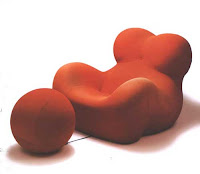
 Ever since the war ended, different aspects of life, such as the economy, technology, as well as architecture and design had gone through numerous transformation. Shapes, forms, materials, color-palettes, ornamentation, and methods of construction of objects became simpler, more mass-produced, and highly advertised in order to accommodate the modern society who experienced the loss after the war and demanded a much more efficient lifestyle. In the 1960s, the division between "good design" and mass-production began to somewhat blurry as home furniture and accessories stores, such as Habitat marketed their goods on interior displays (Raizman, p. 318). In addition, synthetic plastic became the new and popular material for the production of furniture. For instance, British industrial designer, Robin Day designed the Polyprop Chair in 1963, from which the name of the seating corresponded to polypropylene, a synthetic plastic used as the main material (Raizman, p. 317). Since people were looking for more ease and efficiency in furniture, these chairs were designed to be stackable; hence, they became easy to store, and people were able to save some space in their homes. Although there was a connection between home furnishing and fine arts, these mass-produced goods were more sleek and simplified in general as designers and the overall society opted for standardization because of its easy assembly and lower production cost. Furniture, kitchen appliances, home accessories, and even automobile were more streamlined and rectilinear in form and subdued in color.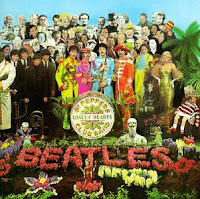
Sunday, November 23, 2008
Contemporary Design and Mass Culture, A
The 60's and 70's were a time of great innovation all around the world. New materials, new products, new processes, and new ways of advertising were all introduced during this time period. While many are impressed with the discovery of new ways of making things with new materials they often overlook a very important aspect: Advertising. Without a way of advertising for their products companies would find it harder to get their product on the market and sell it with great success. While televisions and radios were being invented around this time actual paper advertisement remained extremely important. As a result graphic design became very prevalent. Artists were commissioned to create logos for large companies. Creating these logos entailed creating a graphic as well as a unified text style to be associated with a particular brand. For example, Paul Rand was hired to design the logos for IBM, the Westinghouse Corporation, and ABC (Raizman, p. 328). When developing logos and advertisements it was important for the designer to be sure that it pertained to the audience he or she was trying to reach for instance in terms of age and nationality. It was also important for graphic designers to create universal symbols so that someone of a different nationality could still understand what was trying to be said. For example, symbols for men's and women's restrooms, telephones, airports, trains, smoking or non-smoking, etc. (Raizman, p. 330). Graphics can also be used for the power of suggestion. Artists may use a particular font, texture, or graphic in order to imply a certain feeling that he or she may want the viewer to acquire when viewing the ad. As you can see graphic design has more of an impact than one might consider. In what ways will you incorporate graphic design into your career as an interior designer. Do you think it will have an effect on your success as a designer and your ability to acquire clients? Why or why not?
Monday, November 17, 2008
Design and Mass Appeal/New Materials A


While the first post-war decade of the 1950’s initially brought about a much greater focus on mass media and consumption of goods, the 1960’s expanded on the use of new technologies and materials to create false obsolescence of goods. However, instead of merely focusing on better economic value and functionality to categorize a product as “new,” manufacturers and designers began to focus more on esthetics, combining art and functionality. The wealth of new materials and processes developed in the 1960’s and later began to obscure “the distinction between design and fashion, between needs and wants.” (Raizman, pg 318) This meant that functional design went hand-in-hand with current trends of the time and, as a result, wants became necessities. A few of the main materials used during this time were plastics and metals. Various new processes were used to make strides in areas such as furniture design, product housing, and sports equipment. Changes in furniture design were made possible by the process of injection-molding stronger plastic polymers, molding lighter weight aluminum, and using foam as a construction material instead of merely filler for upholstery. Seating design came to resemble many tendencies in the fine arts, such as abstraction and precision. A few great examples of this include Joe Columbo’s injection-mold plastic side chair and Pierre Paulin’s foam “ribbon chair.”

 Next, new materials and processes were used to make product housing much more compact, often allowing for more portable products. Called miniaturization, a few examples of this include a portable typewriter developed by Ettore Sottsass and Perry King, a portable television developed by Sony, and the Walkman portable cassette player, also developed by Sony. Finally, the use of metals instead of wood in sports equipment lead to many performance-enhancing changes to more simple designs. The professionals who advertised them endorsed the idea that the newer, lighter, more contoured designs were better for the athletes that used them. One primary example of this was how tennis rackets began to be made from aluminum. All of these new products and processes were supported by the development of brand recognition through graphic design of easily recognizable symbols. These symbols developed corporate identity systems based on the characteristics of those most likely to buy the products, which helped to advertise the products and make them more well known.
Do you think that these advancements demonstrate positive or negative changes to production of goods? How have these products and processes paved the way for products we see in stores today? How has the use of these new materials affected the economy and the styles of today? Are they supportive of the "green design" emphasized in today's society?
Sunday, November 16, 2008
Design & Mass Appeal/New Materials B

Many industries used obsolescence to market their products. During the 50’s the biggest example of this is the automotive industry. General Motors president Alfred Sloan used annual stylizing changes to “create a vehicle “for every purse”, defining a series of gradations from efficiency to luxury in terms of visible difference…”. (Raizman, pg. 296) The number of car makers began to decrease because of the competition to promote their annual changes. Brand identification was also very important.
Advertising for cars came in many forms. Hollywood helped to show the freedom and individual expression in movies like American Graffiti. Ads in magazines and newspapers showed attractive couples either coming in from a night out or at some fabulous restaurant. These ads helped to equate luxury with cars.
Obsolescence can also be found in the model home market. Instead of different models every year, it was used to show individuality. “And like car makers, they used styling to give buyers an illusion of choice”; this pretty much sums up the model housing in the 1950’s. (Votolato, pg. 227) Consumers were offered choices to make the model homes not so cookie-cutter. Practical considerations also drew consumers. Kitchens with picture windows, attached garages and appliances tried to tip the scale of conformity.
The 1950’s was about convenience. Time saving appliances, model homes, cheap products were all the rage. How has this affected today’s culture? Do you think design in this period had a large impact on design today? Give some examples of obsolescence today. Do you think false obsolescence is a good marketing tool?
Design and Mass Appeal/New Materials, C
Thanks to the long period of peace and political stability, the United States was particularly able to accumulate a large amount of money and rebuild its economical and political powers.
It is during this time that the development of new materials, such as Bakelite, Lucite, Vynilite, Rayon and Nylon, new techniques and the electrification of the assembly line brought new possibilities in all fields of design and architecture. Also, the time of peace allowed people to enjoy their leisure time and really look forward to achieve their desires. New luxurious beach resorts came to play an important role in Americans new vacation times because they offered services that were not available in the domestic sphere and because they opened a new market for travelling.
From the 1950s, we rapidly saw the development of a mass culture that appreciated money, beauty and luxury.
Thanks to magazines and catalogues, people were now able to choose from a wide variety of products, from houses to home appliances, cars and fashion products, sport goods and toys.
William Levitt, considered the Henry Ford of housing, introduced the mass production of houses. As people moved away from the city into the suburbia, they wanted new, cheap houses, and Levitt gave them what they needed. Thanks to the use of inexpensive materials, like concrete, wood studs, dry walls, etc., and the fast methods of construction, these prefabricated houses could be put up in a very short time and efficient manner at a very low cost, starting from $ 7900 (Raizman, page 305).
 Even though it created conformity and peripheral areas look almost entirely the same, everyone could customize their house the way the wanted to. Also, with the availability of new products (television, radio, home appliances, kitchens, chairs, home décor, etc.), people started to fill these places with as much stuff as possible, and, likewise the Victorian Era, they could show off their status by displaying all that they had. On top of that, if they could afford one of the new models of automobiles, they could park this one in their new garage, attached to the house – one of the new features of the prefabricated residence.
Because of the abundance of products and the possibility of customization, the new concept of obsolescence came to be of great importance in post war society. As new objects were produced and advertised, old ones became out of fashion. Everything, from fashion to interior design products, home appliances and sports goods, was affected by seasonal changes, even if minimal. The late 19th century society became known as a throwaway society deeply affected by advertising and vogue.
 After the war, Europe started to rebuild what was left, trying to keep a balance between their historical past and the modernist influence coming from the United States and Japan. Because money was a problem and there was not much of it left after the war, obsolescence and mass culture less affected Europe, and did not allow the mass production of goods and especially houses. In fact, if you get a chance to travel to Europe, you will see that conformity and standardization are not as common as they are in the United States. Why do you think the United States opted for standardization instead of diversity? Even in clothing today, such as Abercrombie or Hollister, seasonal changes are very minimal. In the design of houses, we still see prefabricated houses and residences that look very similar. Do you believe that conformity is an advantage or disadvantage to American traditions and culture? How do you think the United States is seen from the outside because of this globalization within its own borders?
Monday, November 10, 2008
International Modernism C
When creating these national identities there were two major design ideas that countries would adopt into their design style. The first was a national style based off of the Craft time period, a movement focused on natural materials and manual labor. The second idea found in this time period was the idea that the world was moving into an industrial way of life. This idea was considered to be a “leap of faith” in the design world (Sparke, 95).
During this time of national growth and identification, a strong sense of competition was also present. This competition was best shown within the numerous exhibitions of the time. One of the first exhibitions included the exhibition in Hyde Park, London. The great sense of competition is also shown through the amount of countries participating in these exhibitions, like France, Germany and the United States (Sparke, 97)
Furthermore, there was a very large interest in the popular exhibitions of the time period. For example, Paul Greenhalgh, author of Ephemeral Vistas: The Expositions Universelles, Great Exhibitions and World’s Fairs, studied the various exhibitions and found a series of common themes in each (Sparke, 97). Some of these themes included “new technologies, raw materials and manufactured goods” (Sparke, 97).
Overall, each exhibition provided an opportunity to show off one’s national strength. Also, national achievements and products were displayed openly and proudly.
How is this different from our present day world?
Is our economic and national strength put out there for others to see, like in the various exhibitions of the time period?
Today, are different countries so eager to share their materials and products?
Furthermore, do you think nations today have met their goals in establishing their own national identities and design styles?
